Revolutionary biomaterials
for forward thinkers.


Celium™
Premium Cultivated Cellulose.
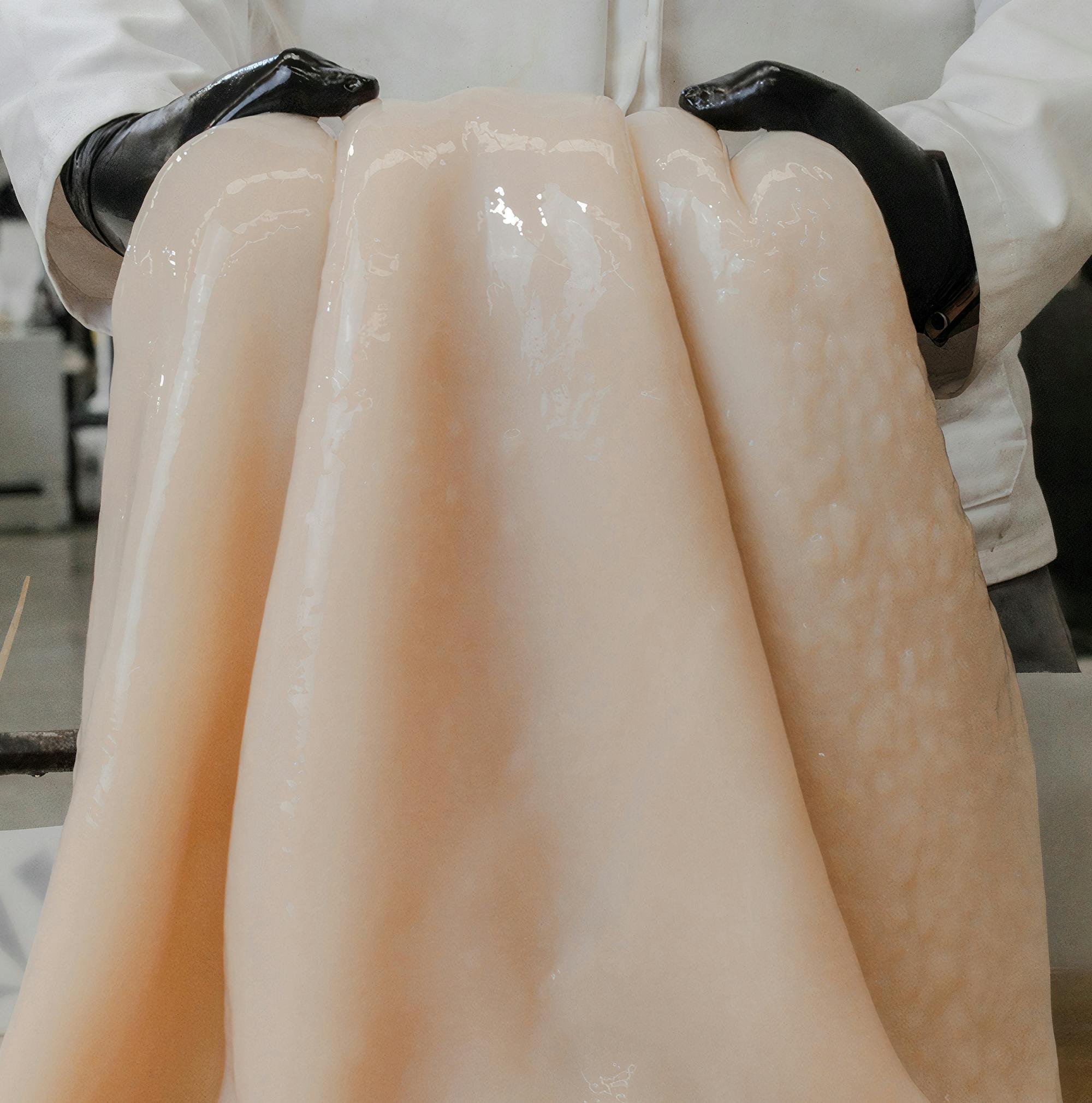
We grow Celium™ by feeding bacteria with agro-industrial fruit waste.

Rooted in biology
Guided by design
Refined into Celium™
Celium™ is a new generation of cultivated materials.
Grown by bacteria nourished with agro-industrial fruit waste, it forms during fermentation as a cultivated sheet of cellulose. This biological origin gives Celium™ a coherent structure that is resilient, soft, and inherently adaptable.
After cultivation, the material undergoes a stabilization process that defines its characteristics. During this stage (our equivalent to tanning), we refine thickness, handfeel, flexibility, and overall performance. Once stabilized, Celium™ can be finished through color, embossing, or protective finishing, extending its visual and functional possibilities while preserving its biological foundation.
Celium™ does not imitate existing materials; it stands as a category of its own. Each sheet carries subtle variations linked to its living origin, resulting in a refined, high-performance material capable of adapting across applications. Cultivated with precision and shaped through intention, Celium™ reflects a new approach to making: one that begins with life and evolves through design.


One material, multiple expressions
Performance Meets Possibility
One cultivated material can take on many roles. Celium™ begins as a cultivated sheet of bacterial cellulose, but its behavior is defined in the hands of designers and makers. It can drape, fold, and stitch like a soft surface, or be structured into precise, architectural forms. The same origin can become a garment panel, a bag shell, a lighting element, or a piece of furniture detailing.
Its versatility comes from how it responds to transformation. Celium™ can be cut cleanly, layered, perforated, embossed, or combined with other substrates to adjust body and support. Surface finishes introduce color, protection, and texture without erasing the material’s depth. This combination of responsiveness and stability makes it suitable for both tactile, close-to-skin pieces and more robust, spatial applications.
Across these uses, Celium™ maintains a coherent identity: a cultivated material with a refined hand, visual definition, and a clear link back to its biological origin. Rather than mimicking existing materials, it gives designers a single, consistent base they can push in multiple directions, exploring new expressions without changing the underlying source.

Where biology meets creativity, the future unfolds.


How to Work with Celium™
Celium™ is available in full sheets, sample kits, or through custom developments. Brands, studios, and independent designers can request materials directly from our team by filling out the inquiry form or contacting orders@polybion.bio.
Each request begins with a short conversation. We help identify the most suitable version of Celium™, discuss quantities, finishing, and timelines, and offer tailored guidance for your intended application. For small developments, the minimum order is two sheets of 17 sq.ft. each, ideal for prototyping. For customized color or material characteristics, the minimum order is 63 sheets. For pricing, please contact our team.
Celium™ is grown to order. Although our production is fully scaled, cultivation happens batch by batch, which means we operate through a delivery pipeline and often work with a waiting list. Once your order enters production, we coordinate cultivation, finishing, and shipment from our headquarters in Mexico to any destination worldwide.
Celium™ is cultivated with care, and so is every collaboration that begins with it.


Polybion and Natural Urbano reinterpret Lomo suspended light in a Made with Celium™ edition

- Published on
- September 9, 2026
Natural Urbano and Polybion™ present a new Made with Celium™ Edition of Lomo, a suspended lighting piece from Natural Urbano’s Legacy Collection.
Lomo is a suspended lighting piece from Natural Urbano’s Legacy Collection, now reinterpreted through a new Made with Celium™ Edition developed in collaboration with Polybion™.
The original design takes inspiration from the sudadero, the textile traditionally positioned beneath a horse saddle. Drawing from Natural Urbano’s long standing proximity to horses and the visual memory surrounding these objects, the studio abstracts the proportions, movement and material presence of the reference into a contemporary suspended form.
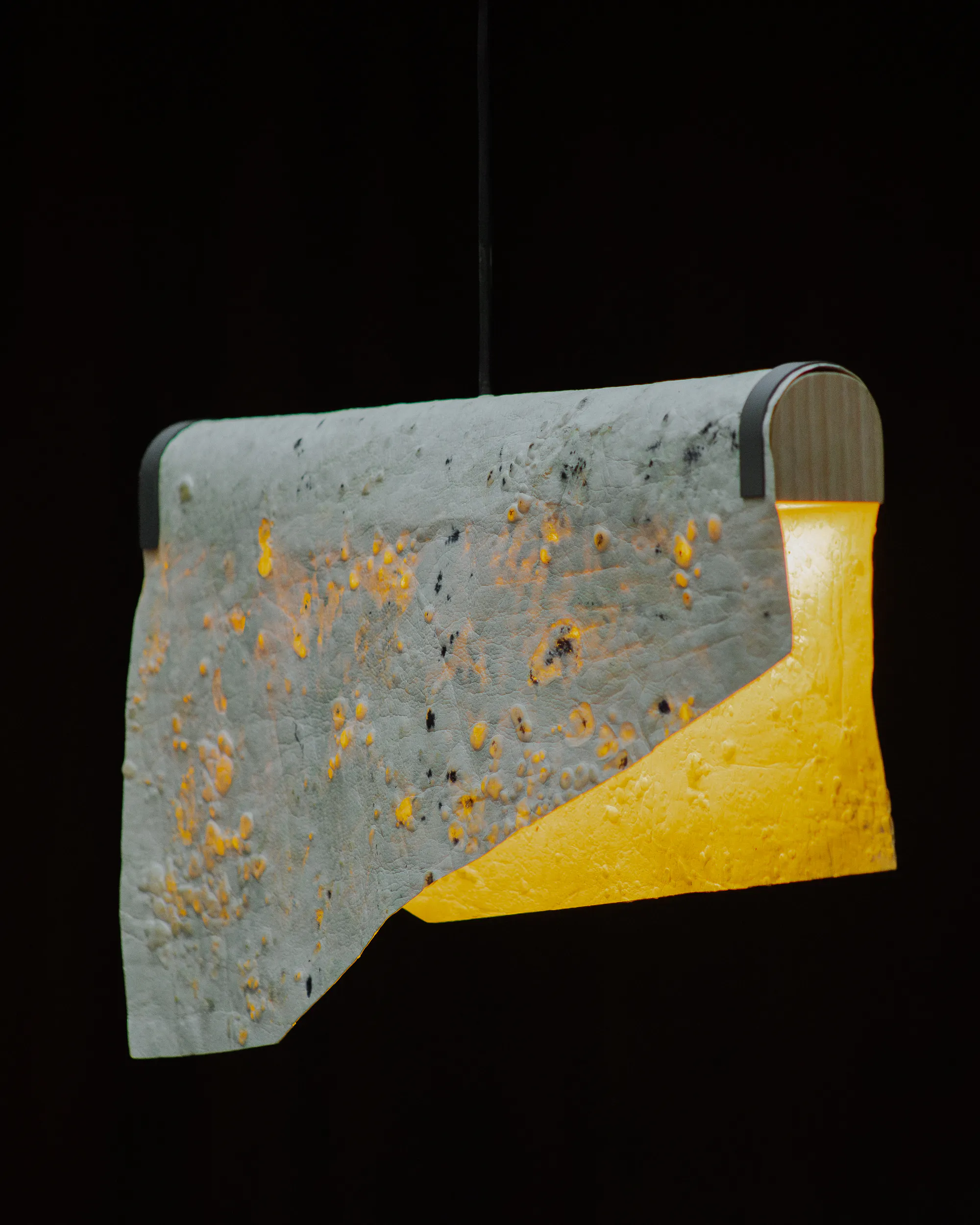
For this edition, Celium™ — Polybion’s Premium Cultivated Cellulose introduces a new material behavior to an established design.
Rather than concealing the lighting structure, the material allows light to interact with the object itself, revealing its interior and producing variations in depth, translucency and texture.
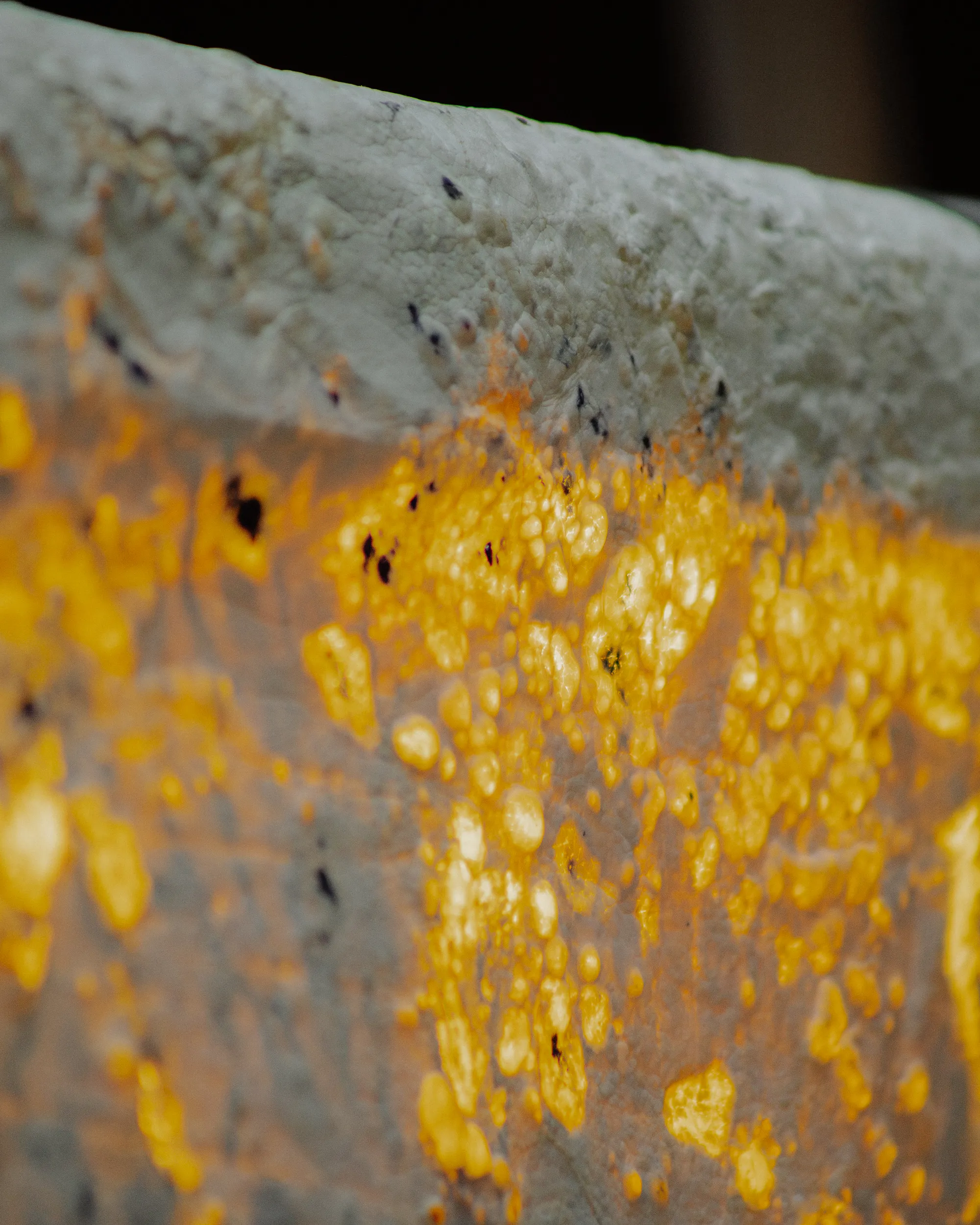
The edition explores two expressions of Celium™: Manto, with greater translucency, and Espumante, with a denser and more textured presence.
The project marks the third collaboration between Natural Urbano and Polybion in less than a year, following Lapso and Cenit. The sequence has become an ongoing material investigation in which each project expands on the previous one.
In Lomo, that evolution takes a different form, instead of developing an entirely new object, the collaboration introduces Celium™ into an existing piece from Natural Urbano’s design legacy, demonstrating how a cultured material can generate new visual, tactile and functional readings of an established design.
The Made with Celium™ Edition therefore represents both continuity and transformation, preserving Lomo’s original identity while expanding its material language.
DESIGN AND LAMP PRODUCTION
Natural Urbano
MATERIAL COLLABORATOR
Polybion™
MATERIAL
Celium™ Manto / CeliumT™ Espumante
PHOTOS
Galar, Claudia Campos
LOCATION
Mexico
YEAR
2026
AVAILABILITY
Made-to-order
USE
Interior
TECHNICAL SPECIFICATIONS
Dimensions:
Height: 30.3 cm Width: 60 cm
Light source:
LED BAR: IPSA ML-LED 7W/30 TEMP: 3000K
Wattage:
7W/30
Voltage:
120 ~ 240V 60Hz 7W 0.05 - 0.03 A
Color temperature:
3000K
Dimming:
No
Cable length:
2 m
Weight:
1.4 kg
PRESS / CONTACT
Press contact: press@polybion.bio
Natural Urbano contact: contacto@naturalurbano.com